A little angel mignonette
 |
|
|
The concept of small ╚pocket╩ dolls made of high-quality non-glazed porcelain was first born in France in the second half of the XIX century. Despite the fact that 5√7 centimeter characters for dolls▓ houses were produced in the neighboring Germany at that time it was Paris where the idea of a nice ╚independent╩ small doll made with particular care was conceived.
|
The concept of small ╚pocket╩ dolls made of high-quality non-glazed porcelain was first born in France in the second half of the XIX century. Despite the fact that 5√7 centimeter characters for dolls▓ houses were produced in the neighboring Germany at that time it was Paris where the idea of a nice ╚independent╩ small doll made with particular care was conceived.
Since 1877 such dolls have been called Mignonette (╚mignonne╩ means lovely, refined, tiny). The new dolls were introduced by Ferdinand Sastrack ≈ he recorded patent on the design of dolls not higher that 20 cm. They could turn their head, arms and legs and also bend knees and elbows thanks to wooden balls in their joints.
The idea should have been in the air as two years later, in 1879 a certain Schmidt recorded almost identical patent without knowing about his opponent. Lawyers appealed against it and Mr. Schmidt had to turn out his products without marking. It is fair to say that the quality of his dolls was higher than that of his French opponent.
Porcelain dolls of the new generation were made completely from porcelain. The oldest ones were of very tender colour, often barefooted, although in the end of 1870 some of them got fine drawn socks and boots.
All the dolls were blondes with straw-yellow wigs. In 1880 the children magazine ╚La Poupee Modele╩ officially called such dolls Мignonnettes for the first time. It finally assigned this definition for tiny porcelain beauties.
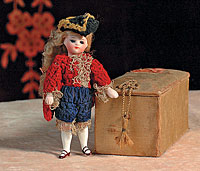
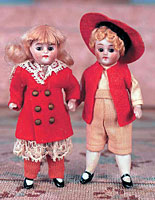
Today the term is used to denote all the baby-dolls with girl▓s figure. They usually have glass eyes that do not close, closed mouth, wig from natural mohair. The dolls had the whole world of their own. The same magazine ╚La Poupee Modele╩ permanently published patterns of different dresses that its subscribers could easily make; there were coloured pictures of rooms, bowers and salons with paper furniture that could be cut out and glued. The Levesque Company specialized on producing accessories for mignonettes. They presented everything: from binoculars and scissors to handbags, dishes and brushes.
Mignonettes were usually sold in beautiful boxes with a package of rich dowry. Among the most famous couturiers who specialized on dolls▓ luxury costumes was Clare Lackan. Her works were even exhibited at the special exposition in Paris in 1878.
German manufacturers were quick to elaborate the idea and produce porcelain ╚girls╩ of small size. For example, Carl Horn Company (1906√1930) situated in Dresden started producing dolls in costumes of different styles. Some industrialists managed to create wonderful samples that now are estimated highly by collectors. These are products of companies KESTNER, LIMBACH, GEBRUDER KNOCH and others.
The Germans sold porcelain babies longer that the French. The French stopped producing mignonettes in about 1917 when they were changed by dolls of composition that were cheaper and simpler.
Nowadays there are many collectors in Europe and America who collect only rare ╚pocket╩ dolls. But anyhow they are part of almost any dolls▓ collection as it is considered that mignonettes are a kind of small guardian angel that is always with you.
|



 Available russian version




 Headquarters, Edition, Advertising department, Sale department, Information agency